
|
Maria Servold Later this month, I will pass a significant milestone - 10 years since my miscarriage. I lost my first baby at nine weeks gestation on September 29, 2012. There are certain moments I remember distinctly from the early weeks of that pregnancy (my first) and the miscarriage. I remember the joy I felt when I saw the two pink lines on a positive pregnancy test, and the excitement my husband and I felt when we told my parents. … being glad I didn’t have much morning sickness, but wondering if that was a bad sign. … when I began to have some light spotting while at a mall with a friend on Saturday, Sept. 29. … when later that night I began bleeding profusely and my husband and I rushed to the ER. … the doctor who treated me, and how he yawned and seemed disinterested while telling me “you’re probably miscarrying.” … waddling between the bathroom in the ER and my curtained stall, passing large clots and, I assume, my baby’s body. I was never able to recover it. … the incredibly kind nurse who saw me crying in the ER hallway and gave me the best, most comforting hug I may have ever gotten from a stranger. … going home knowing my baby was gone. … 10 days later when I began bleeding profusely again and had to undergo a D&C. … the nurse I had in the ER before the D&C, and her cute, pregnant belly. She offered to find another nurse if her being pregnant upset me. … telling my boss to tell my students that I had the flu, so they wouldn’t wonder why I wasn’t teaching for a while. Most of all, I remember the feeling of emptiness in the days and weeks following my loss. But - I also remember these things: …The way my husband took care of me and supported me, even when he wasn’t sure what to do. …The way my father-in-law (who was in town when I had to make my second trip to the ER) made dinner for several nights, since I couldn’t. …My aunt telling me I had an angel waiting for me in heaven. …When I first met EPLA’s founder, Emily Carrington, and how she openly talked about her losses, inspiring me to do the same. …The first focus group we held in 2016, when we tried to figure out what miscarrying women need and how, maybe, we could help them. …When Emily asked me to join the board of EPLA and the five of us on the board began building the organization. …When we delivered our first batches of miscarriage care kits around our city and eventually, the country. …When we went to a perinatal loss conference and doctors and nurses told us “thank you” for developing the care kits. Now, 10 years and three live births later, there isn’t a day that goes by that I don’t think of that first baby I lost. I’ll never “get over” that loss, nor will I forget some of the painful moments during and after it. But, I also take solace in the fact that I get to help other women through their own losses with the Early Pregnancy Loss Association. 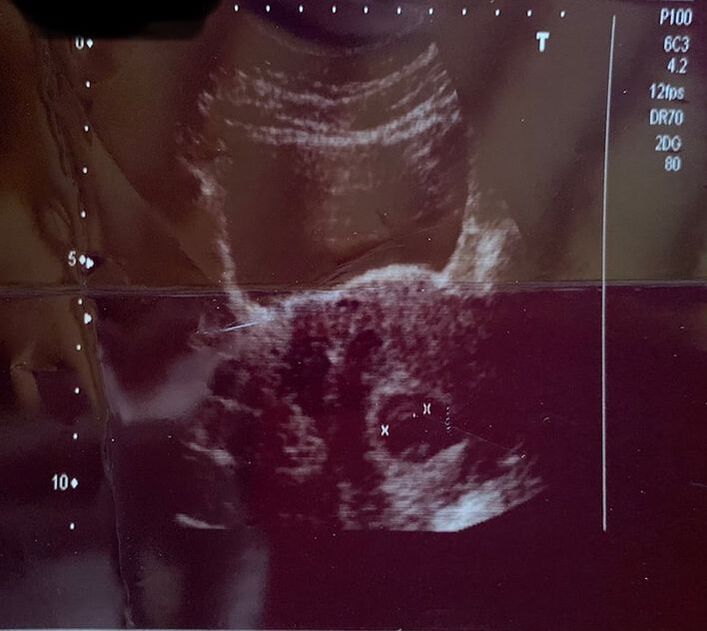
1 Comment
By Maria Servold
EPLA Executive Director One of the things we often talk about on this blog is the tendency of women and families who suffer miscarriage to feel alone. It is our goal that none of them feel lonely or that “I am the only one” after a loss, and we’re glad to see more and more organizations entering into the important work of supporting women after loss. Recently, I came across an Instagram page that posts beautiful reflections on miscarriage, called The Understanding Heart, and it’s blog by the same name. The account’s first post, from September 2021, describes the page’s mission: My hope is that this account can act as a safe space for families suffering through pregnancy loss of any kind. My goal is always to break the stigma of miscarriage but also to empower the women and families in the throes of grief to know that their pregnancy matters, their baby matters and their grief is as real as it would be had their babies made it earth-side. I look forward to sharing pieces of my own story with you and listening to your stories of the sweet babies we weren’t able to hold long enough. I hope this page finds you when you need it most. Even though healing is not linear, we don’t have to heal alone. Many of the page’s beautiful posts offer words of support, affirmation, and love to those suffering loss. It’s a great page to share with someone suffering a miscarrige. I found it helpful and informative, even nearly 10 years after my own loss. -- Another relatively new organization providing support to women after miscarriage is Evermore Blooms. The company delivers flowers to women after pre-20 week loss, thanks to the generosity of anonymous donors. The founder says she received a bouquet of flowers anonymously on the two-year anniversary of a miscarriage, and was inspired to bless other women the same way. What a beautiful idea! The group also offers other gifts and an online Facebook community for loss moms, called the Flower Patch. We are so grateful to see other groups that seek to support women after early pregnancy loss beginning to “bloom.” Emily Carrington EPLA Executive Director In the days, weeks, months, and even first couple of years after my three miscarriages I was filled with spite, jealousy, and even rage. Every pregnant woman, every baby, every announcement, gender reveal, baby shower, all filled me with deep pain often manifesting as a very ugly green-eyed monster. After the birth of my daughter the jealousy started to subside. Sometimes guilt would fill its place. I knew now I was the pregnant woman, I carried the baby, I had the baby shower. I knew that there was not enough tact in the world for me to ease the pain of suffering moms. I knew deeply that just the sight of a pregnant belly could be enough to plunge someone deep into despair. I knew that while my story was celebrated as hope, a hurting mom would still feel a punch in the gut. There are no promises that we will all get our live births - some of us know that too well. Now that I have had two live births the jealousy of pregnant women and babies is gone. The sweet coos are no longer a direct punch to the gut. But some of the jealousy remains. My history of miscarriage has robbed me of looking forward to future children with happy expectant hope. The risk of miscarriage burdens even the thought of future pregnancies. I am jealous of women who have had multiple successful pregnancies and no losses. Of course I don’t wish them my pain, but the jealousy remains. I want to be them. It is a little bit better now, but not gone; the jealousy now feels like a tired sting not a robust gut punch. Which leaves me to wonder: will it ever go away?  Nick Carrington Hope Blooms Editor A month or so ago, our family attended a large reunion of Rachael (my wife)’s relatives. Her grandparents are still living, born in the 1930s and in their mid 80s. One night after the army of little ones went to bed, those grandparents told the story of their family going back into the late 1700s and early 1800s. Rachael’s grandmother understood a big portion of her history intimately. She knew her great grandmother until she was 11, hearing stories about homesteading and exploring new parts of the United States that few, if any, had seen. Several members of the family helped compile documents to aid the family history. One of those documents was created by my father-in-law. It showed the family tree across five generations, down through my own kids. In it, we saw the shadows of both joy and suffering, the many kids that each family was blessed with and the ones who they lost young. As I looked at my own generation, I scanned through all the children, my own and my nieces and nephews. One entry stopped my breath, made my chest constrict. My brother-in-law and sister-in-law have five living children, all listed with their names and birthdates. But another name appeared in that line, a name that makes every heart ache in that room. Those parents lost a child between their first and second living children. It was a boy, and they named him Jaron. And even though he wasn’t at the family reunion, even though none of us got to take him on hikes or watch him jump off the high rock into the lake where we were staying, he was honored as a family member in that tree. It may not seem like a lot, but in that moment, I was proud that this family, the one that had accepted me as one of their own even if we don’t share blood, celebrated a child that was miscarried.  Emily Carrington
EPLA Executive Director In recent weeks, early pregnancy loss has been in the spotlight, following the controversial Dobbs v. Jackson Women’s Health Organization decision in the Supreme Court. Some fear that common medical care for miscarriage and ectopic pregnancies will be restricted by a lack of federal protection for abortions. Confusion, deep fear, gray areas, and highly charged political motives have served only to muddy the waters for women, lawmakers, lawyers, and doctors alike. At EPLA, we strongly believe it is important for everyone to have a clear understanding of early pregnancy loss and the medical procedures required during and after a loss. Clarity and precision are necessary for both lawmakers and doctors to distinguish an elective abortion from what is known as a spontaneous abortion. They then must address the gray areas with nuance and care, but address them nonetheless. It is our understanding that currently no state law prohibits care for miscarriage or ectopic pregnancies. Additionally, President Joe Biden recently signed an Executive Order that would ensure protection for emergency medical care for early pregnancy loss. As the Early Pregnancy Loss Association, we believe it is important to continue to protect care for the sake of women and their families in the case of spontaneous abortions (miscarriages) or ectopic pregnancies with precise, clear, nuanced laws. We continue to stand by our core values, affirming the life and death of a miscarried child, and hope to usher in a world where all honor the dignity of that life and death.  Through donations and partnerships, EPLA has far more resources than it did when it first launched. These resources allow us to put together miscarriage kits, invest in space to store our growing supplies, and work towards paying medical bills for loss mothers. Some of the things we’re doing now were only a dream a few years ago.
We hope the growth doesn’t stop there. EPLA desires to do more for families and loved ones, to educate, bear burdens, and affirm life. To do so, we need financial help from our supporters. One great way to help is through our Amazon Wishlist. We are always in need of items like sanitary pads, tea bags, flowers, and lip balm. Shopping our wishlist make it easy to send your donation straight to our door! Because of inflation and other economic factors, people have less money to donate to worthy causes, but one way you can support us without using extra funds is to use Amazon Smile. By going to smile.amazon.com and choosing EPLA as your charity of choice, Amazon will donate 0.5% of eligible purchases to EPLA. As you shop for everyday materials or gifts, you will also support us as we care for hurting families. No extra money for you but a big help for us. So we ask for your support: your prayers, your time, and any financial resources you can spare. We will use those funds to try and keep loss parents from suffering through miscarriage alone. 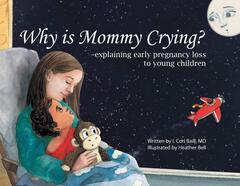 By Maria Servold
EPLA Executive Director One of the hardest things families experience during a miscarriage is how to explain it to other siblings, especially if they were already excited for a baby to join the family. Children can have a hard time understanding “where the baby went” and why it won’t be born like they were expecting. These conversations are difficult, but we honor the lives of our miscarried babies by talking about them with their siblings. Remember, there is no script for these conversations. Honesty and simplicity will go a long way toward helping children understand a loss. That said, many parents may find it helpful to look through a book with their children that explains miscarraige in a kid-friendly way. Last year, I interviewed Dr. I. Cori Baill, an OB-GYN and author of a beautiful children’s book about miscarriage, called Why is Mommy Crying? After suffering a miscarriage early in her medical career, Baill said she found herself looking for resources to help her explain the loss to the two small children she already had. “I was very surprised at the lack of resources, starting with my religion, which said there was no ceremony, there was no prayer, there was no ritual,” she said. I was really surprised that there was not much out there to help me explain [miscarriage] to my children.” Afterward, she said, she had a “germ of an idea” about a children’s book that could help explain early pregnancy loss. Baill said she watched and waited, certain someone would write and publish such a book. “I had this idea for a children’s book that I thought was really needed,” she said. “I didn’t think I was the right person to write it. I didn’t think I was an expert. I kept my eye out for the book; kept looking for someone to write it.” But no one did. So, eventually, Baill wrote it herself. In addition to helping explain miscarriage itself to children, Baill said she hopes the book can serve as a springboard for discussion among parents and their children. In the back of the book, she provides a list of resources for helping children through grief, for example. There are other children’s books available to help parents discuss miscarriage and infant dealth, like, We were gonna have a baby, but we had an angel instead, Our Heaven Baby (with an explicitly Christian focus), A Rainbow Baby Story (designed to tell children about a sibling who died before they were born), and Dancing on the Moon (focusing on infant death). We hope these titles give you a starting point when talking about miscarriage with children, and that you share them with other families experiencing loss. By Emily Carrington, EPLA Executive Director Miscarriage is bloody, intimate, and physically mortifying, and for those reasons, it is not something we like to talk about. But we cannot protect a woman’s privacy at the expense of her dignity. To leave her to suffer alone, in a pile of her own blood, is not privacy, is not protection, is not care. It is neglect. There is no dignity in neglect; only deep pain, isolating heartache, and unnecessary shame. As the founding president and now executive director of EPLA I find myself talking about miscarriage a lot. Sometimes, I’m speaking to young mothers who are accustomed to birth stories and more intimate conversations about the body, but other times I’m talking to older gentlemen, who I presume… are not accustomed to such talk. I am not interested in making people blush. I am also not interested in parading women and their humble (and often gruesome) stories in front of others in the name of awareness. This has brought me to think about what is “dignity.” Dignity and propriety matter in society. Often, a miscarriage is a physically gruling and bloody experience that doesn’t fit polite conversation. And while I have told my own miscarriage story to thousands of people over the last seven years, there are parts of it I often keep to myself. Keeping parts of our story private is okay. But leaving others to suffer the same bloody mess without the proper resources is not okay. To restore dignity and propriety to this situation, we must recognize that a woman’s body is tasked with delivering a dead baby and we must meet her needs in that very vulnerable moment. On the bathroom floor with bath towels and a tupperware container isn’t good enough. If you or a loved one is experiencing a miscarriage and have chosen to deliver at home, email us at [email protected]. Please include the name and mailing address of the recipient. We will ship a large miscarriage care kit anywhere in the United States. If you or a loved one have already experienced a miscarriage or will be undergoing a D&C procedure, please email us requesting a small care kit. If you would like to assemble your own kit, here is a list of recommended items:
Other pain and comfort management suggestions:
 By Nick Carrington EPLA Editor Recently, Britney Spears announced that she had experienced a miscarriage. At EPLA our hearts break for her and Sam Asghari, the father. In her post, Spears noted that they perhaps “should have waited to announce until we were further along…”, a common sentiment among families that miscarry. It should surprise no one that families feel that way, and there is nothing wrong if that’s the approach that parents want to take. But there are advantages to announcing a pregnancy early, even if it ends in tragedy. One advantage is that if something happens, a community of loved ones will know the family is hurting and why. Part of feeling isolated is that others, even those close to the loss parents, don’t know their loved ones are struggling. After the loss, it may be difficult to reach out for help because doing so can feel like burdening the people they care about. Another advantage is that more people have the chance to celebrate the child, even as they never get to interact with him or her. Children lost in the womb should be mourned, yes, but also celebrated. They were people, part of a family, if only for a short time. Of course, this approach means that loss parents may have to tell more people than they want about their loss. It can be exhausting to restate something that causes such pain. Regardless of what you decide, resist the urge to second guess yourself. No matter when you announce a pregnancy, there are advantages and disadvantages, and if your family suffers through a miscarriage, those details are some of the least important. Get the help you need – physically, emotionally, and spiritually. For Spears and Asghari, we hope they have peace and that a community rises up to ease their burdens as they grieve.  Nick Carrington is an Editor for the EPLA and Associate Professor of Professional Writing at Cedarville University
|
